




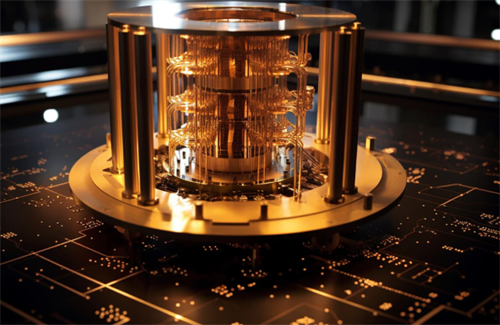
Quantum sensing is rapidly emerging as one of the most operationally mature and strategically significant branches of quantum technology. Unlike classical sensors, quantum sensors measure magnetic fields, gravitational anomalies, time, and acceleration with unprecedented precision. These capabilities are beginning to reshape healthcare, navigation, and environmental monitoring, unlocking both economic and societal value.
Key Takeaways:
-Quantum sensors operate at atomic/subatomic scales.
-Applications include GPS-independent navigation, non-invasive medical diagnostics, and environmental monitoring.
-Advances in atomic physics, solid-state systems, and nanomaterials enable real-world deployment.
1、Why Quantum Sensing Is Advancing Rapidly?
Quantum sensing leverages small, highly controlled quantum systems—atoms, photons, or electron spins—as absolute measurement standards. These systems are inherently sensitive to environmental perturbations, making them ideal for detecting signals that classical sensors cannot resolve.
Compared with quantum computing, which requires maintaining coherence across millions of qubits, quantum sensors operate with relatively small systems, reducing technical complexity while enabling immediate real-world applications. Atomic clocks exemplify this principle, and the same physics underpins quantum accelerometers, gyroscopes, magnetometers, and gravimeters . These devices retain intrinsic accuracy over time, require minimal recalibration, and can operate in challenging environments—ranging from polar regions to hospitals—where conventional sensors struggle .
2、The Physics Advantage: Measuring the Previously Unmeasurable
The transformative power of quantum sensing arises from quantum superposition and entanglement. Superposition allows particles to exist in multiple states simultaneously, enabling interferometric measurements with extraordinary precision. Entanglement generates strong correlations between particles, amplifying weak signals beyond classical limits.
These principles have been verified in foundational experiments such as the double-slit experiment and Bell tests. In applied technology, they allow detection of signals previously buried in noise: the minute magnetic fields generated by neuronal activity, subtle gravitational variations from underground structures, or infinitesimal changes in motion. Compared with traditional fiber-optic gyroscopes or accelerometers, which rely on macroscopic mechanical or optical interference, quantum sensors achieve orders-of-magnitude higher sensitivity and stability, enabling entirely new measurement regimes.

3、Navigation Beyond Satellites: GPS-Independent Systems
A practical application gaining momentum is navigation without reliance on satellites. Quantum accelerometers and gyroscopes measure motion directly, offering positioning even in areas where GPS signals are unavailable or unreliable.
When integrated with AI-driven sensor fusion, prototype systems can maintain positional accuracy within tens of meters over several hours in GPS-denied environments. Such capability has implications for civil aviation, maritime transport, and disaster response, where resilient navigation is critical. For example, quantum-assisted navigation could guide search-and-rescue teams during extreme weather or natural disasters when satellite signals are disrupted.
4、Magnetic Fingerprints: Earth as a Reference Map
Quantum magnetometers exploit the subtle variations of Earth’s magnetic field, effectively turning the planet itself into a natural navigation map. By detecting these “magnetic fingerprints,” sensors can determine location with precision, similar to recognizing visual landmarks—but using invisible, physically grounded features [1].
This approach enables reliable navigation in GPS-denied or remote areas, such as dense forests, mountainous regions, or polar zones, and supports geophysical research by mapping underground structures, mineral deposits, and fault lines. It also benefits environmental monitoring, allowing early detection of changes in subsurface water, cavities, or tectonic activity. By combining magnetic sensing with other technologies like quantum gravimeters or inertial sensors, highly robust and autonomous positioning systems can be created, highlighting the broad civilian potential of quantum sensing beyond military applications.
5、Transforming Healthcare Through Quantum Precision
Quantum sensing also holds promise for non-invasive medical diagnostics, though most applications remain in research or prototype stages.
For example, magnetometers using nitrogen-vacancy (NV) centers in diamonds can detect extremely weak magnetic fields from biological systems [3,4]. Early studies suggest potential applications in cardiology and neurology, including monitoring heart rhythms and neural activity. Companies such as Element Six, QDTI, and QT Sense are exploring prototype devices that measure biomarkers in body fluids or map neuronal activity without invasive procedures [3,4].
Quantum-enhanced imaging and spectroscopy are also being studied for detecting molecular-level changes in tissues. While these technologies are not yet clinically approved, they may eventually contribute to earlier disease detection and personalized healthcare, offering insights into conditions such as cancer or neurodegenerative diseases [3].
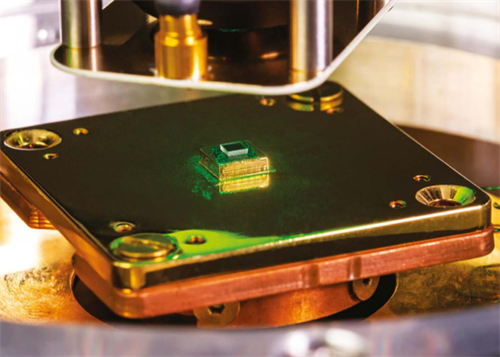
6、Infrastructure and Environmental Monitoring:
Beyond health and navigation, quantum sensors provide a window into hidden physical structures. Quantum gravimeters can measure subtle variations in gravitational acceleration, enabling detection of underground voids, tunnels, mineral deposits, or fluctuations in groundwater levels without excavation [2].
Quantum sensing technology has a wide range of practical applications across civil engineering, resource management, and disaster preparedness. In civil engineering, it can identify potential sinkholes or structural weaknesses before they pose safety risks. In resource management, quantum sensors enable precise detection of mineral deposits and monitoring of aquifers, supporting more efficient and sustainable extraction and water use. Additionally, in disaster preparedness, these sensors provide unprecedented precision in monitoring geological activity, such as volcanoes and fault lines, allowing for earlier warnings and more effective mitigation strategies.
Such capabilities illustrate how quantum sensing can become a foundational tool for infrastructure planning and environmental stewardship, complementing conventional geophysical techniques [2].
7、Technological Ecosystem and Commercialization Challenges:
A growing ecosystem of startups, research institutions, and industry leaders is moving quantum sensing from laboratory prototypes toward deployable systems. Firms such as Q-CTRL and Sandbox AQ integrate quantum sensors with AI-driven control software, while Fraunhofer IAF and universities are miniaturizing atomic and diamond-based sensors.
However, commercialization faces several key challenges. Scaling production to meet large-volume demand while maintaining high precision is a significant hurdle. Ensuring robust and stable operation under diverse real-world conditions—from industrial environments to clinical settings—is critical for reliability. Finally, achieving cost-effective manufacturing is essential to make these advanced sensors accessible for medical, industrial, and commercial applications.
Research centers like Q-BIOMED (UK) and QuSIT (University of Birmingham) aim to address these issues by combining academic innovation with industrial manufacturing expertise, signaling an accelerating path toward practical applications [3]. Notably, navigation sensors may reach commercialization earlier than medical devices due to lower regulatory barriers and less complex biological data interpretation requirements.
Quantum sensing is emerging as a cornerstone technology that bridges physics and real-world impact. By leveraging quantum superposition and entanglement, these sensors reveal phenomena inaccessible to classical instruments, translating fundamental physics into practical applications.
From GPS-independent navigation and environmental monitoring to non-invasive medical diagnostics, quantum sensing promises to reshape multiple domains. Adoption over the next decade is likely to favor organizations that combine technical innovation with scalable, resilient deployment. In short, the question is no longer whether quantum sensing will change the world—it is how rapidly it will become as integrated and essential as GPS is today.
About the Author:
Dr. Li Wei is a Senior Researcher in Technology Ethics and Law, with a focus on the governance of quantum technologies, AI-driven innovation, and emerging digital regulations. Holding a PhD in Law (specializing in technological ethics), he has over a decade of experience bridging academic research and policy practice.
Dr. Li’s work explores the ethical and regulatory implications of transformative technologies like quantum sensing, covering topics such as data privacy, cross-sector application compliance, and equitable technological deployment. He advises governments and enterprises on responsible innovation frameworks, balancing technical progress with societal well-being.
References:
[1] Jones, M. (2025). Physics World, 7, 31.
[2] UK Innovation Agency. (2024, October). Quantum for Health (Quantum Empowering Life) Report.
[3] Markham, M., & Element Six Research Team. (2025). Diamond quantum sensing in medical diagnostics: Prototype studies and applications.
[4] Sahota, S. (2025). Quantum sensors in health and life sciences: Current developments and challenges.

The Model Rental Economy: How AI Companies Monetize Intelligence Through MaaS
Nvidia, Cloud Giants, and Startups: System-Level AI Chip Competition in 2026
Is It Right to “Tokenize” Houses and Famous Paintings for Online Trading?
The AI Chip Wars: Why Tech Giants Are Racing to Build Their Own Brains
Why Agricultural Drone Payback Varies So Widely: Why Large Farms Break Even in One Year While Small Farmers Struggle
Why More Companies Are Renting AI Instead of Building It Themselves?